 Szeto Handyman
Why fans make sense in the valley
- Just the ceiling fan
- Bundle small tasks
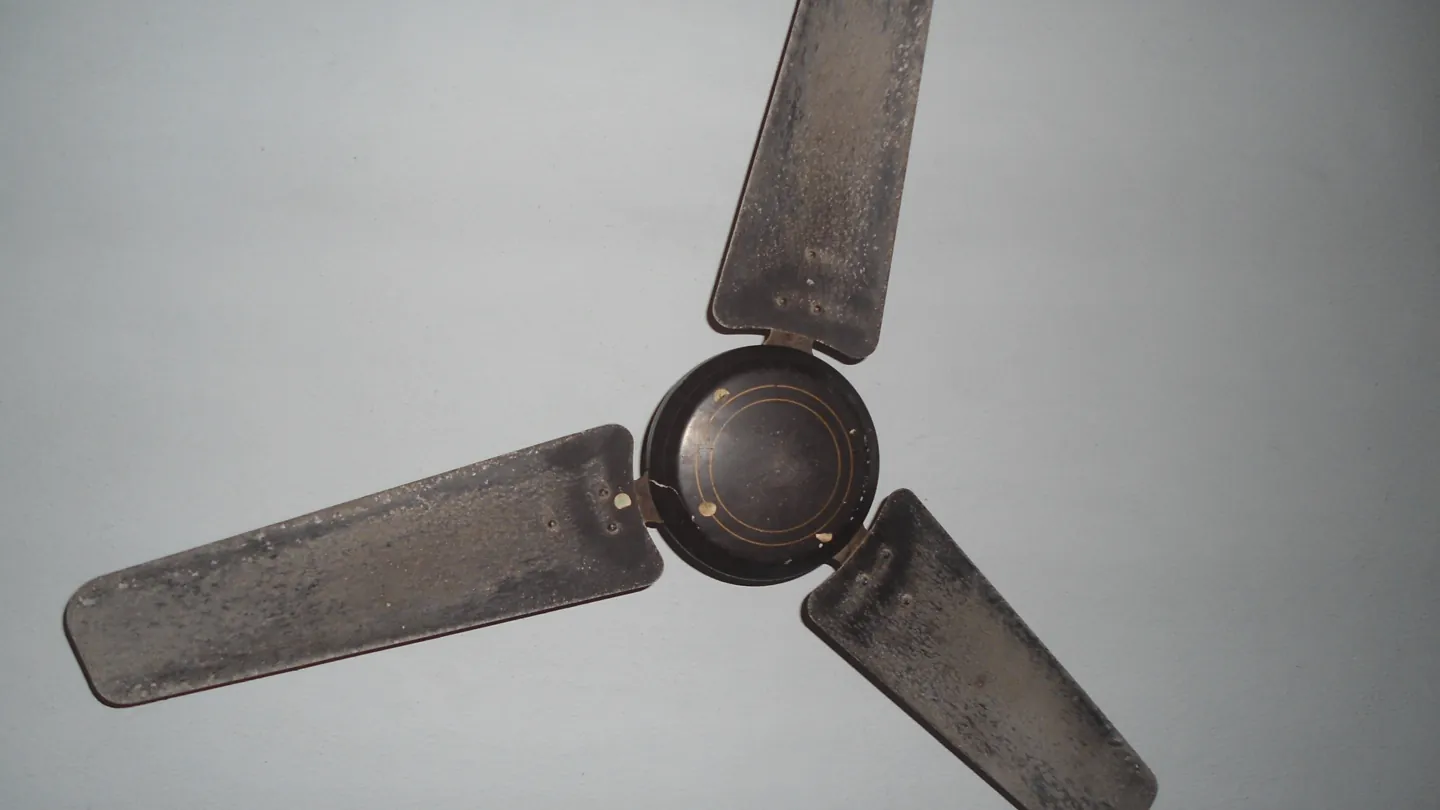
Summers in the San Gabriel Valley run long and hot, and a ceiling fan moves air across the skin so a room feels cooler. Fans cool people, not rooms, so they help most when someone is in the room and can be switched off when it is empty. In winter, many fans have a reverse switch that runs the blades slowly the other way to push warm air down from the ceiling without a breeze.
The box matters most
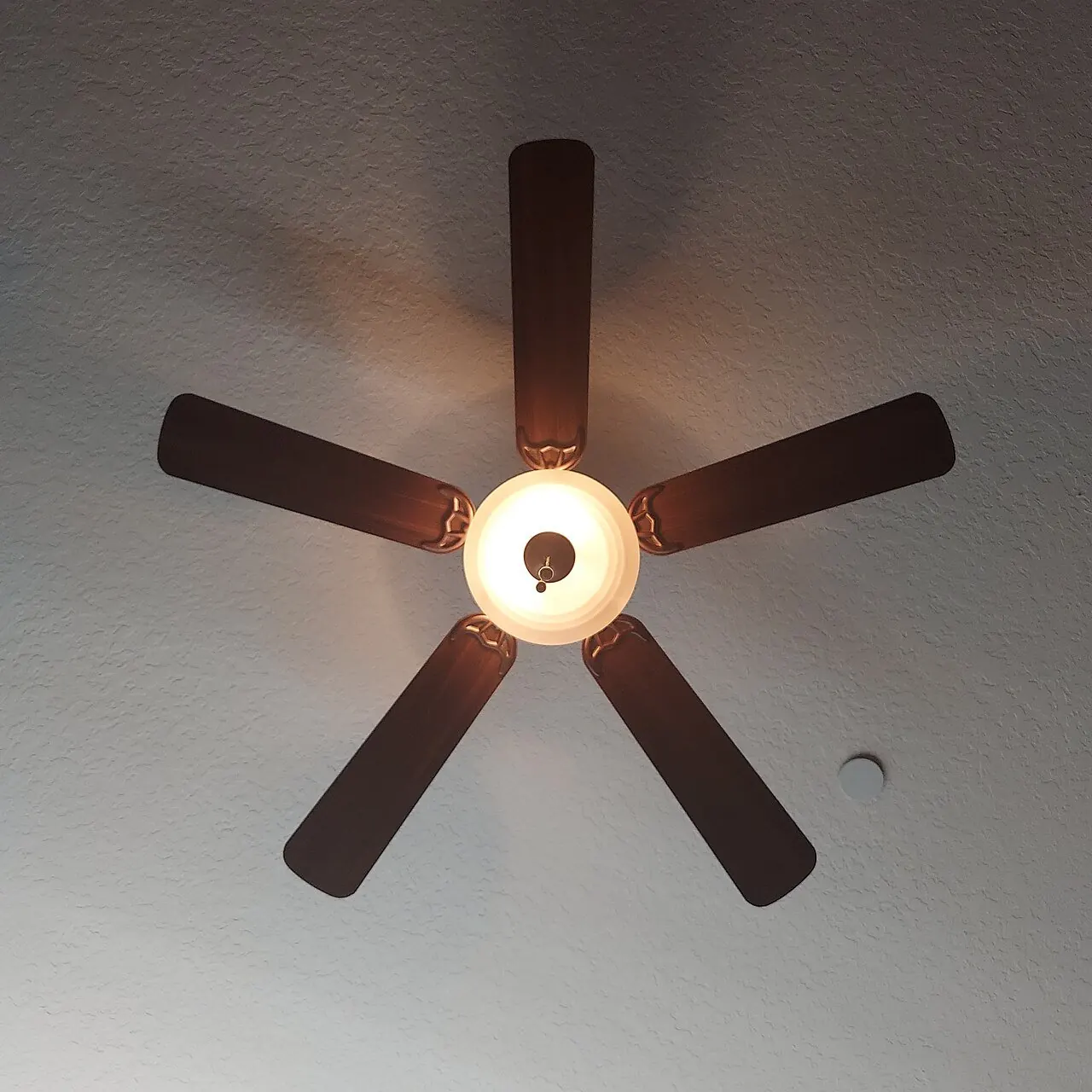
A fan weighs more than most light fixtures and it moves, so it must hang from a box rated for fan support, fastened to framing. Many older light boxes are thin metal or plastic boxes nailed to a single joist or held only by the drywall.
Hanging a fan there can loosen the box over time and let the fan wobble or drop. We check for the fan-support marking inside the box and how it is attached before hanging anything.
- A text on the way to the ceiling fan
- Floors covered, tidy after
When the existing box is not rated, a retrofit fan brace can often be slid through the same ceiling opening and expanded between joists, with a rated box mounted to it. That keeps the work within the existing opening and wiring. If the opening is not between joists or the wiring is not suitable, that is outside our scope.
- Wide shotThe whole fixture and the space around it.
- Close-upLabels, model numbers, the leak or break.
- ConnectionsValves, pipes, wires or brackets.
- Send itText the photos with your cross street.
Choosing a fan
- Size: blade span should suit the room; larger rooms need larger fans or two fans.
- Height: low ceilings need a flush-mount or hugger fan; high or sloped ceilings need a downrod and sometimes a sloped-ceiling adapter.
- Location: covered patios need fans rated for damp or wet locations.
- Controls: pull chains, a wall control or a remote. Remotes help when there is only one switch for fan and light.
- Motor: DC motors are often quieter and offer more speeds.
How an install goes
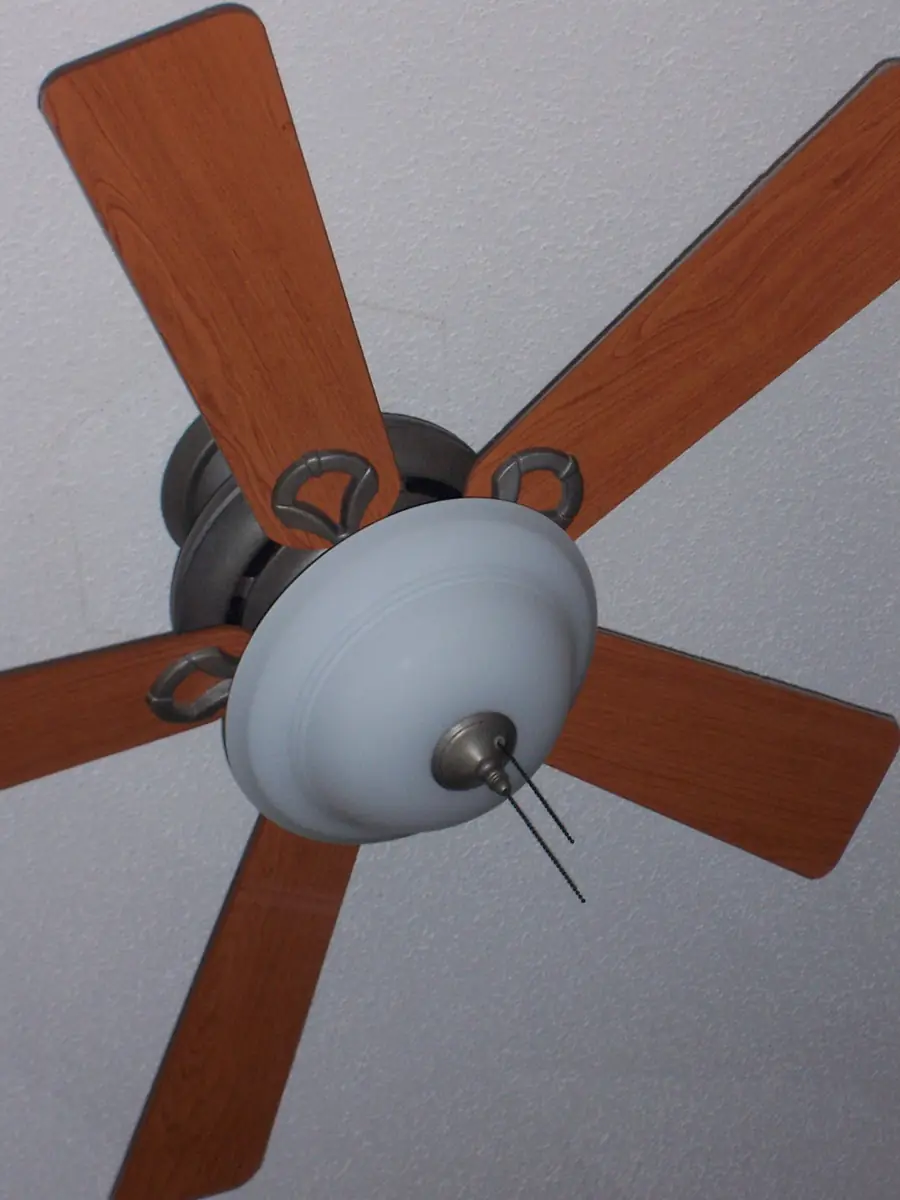
- Turn off the breaker and confirm the circuit is dead.
- Remove the old fixture and check the box, wiring and switch setup.
- Install or confirm the fan-rated box or brace.
- Assemble the mounting bracket, downrod and motor per the manual.
- Connect the wiring to match the existing switch arrangement.
- Attach blades and light kit, balance the fan and test every speed and the light.
Wobble and noise
A fan that wobbles usually has loose blade screws, a blade that is warped or out of line, or a loose mounting bracket. We tighten everything, measure each blade tip to the ceiling, and use the balancing kit that comes with most fans.
Humming can come from a dimmer switch that is not made for fans; fans need a fan speed control, not a light dimmer. Clicking often comes from a loose canopy or light kit glass.
Scope
Our electrical fixture repairs page lists the electrical work we take on.
Fans on patios
Covered patios and porches are a great place for fans during valley summers. Use a fan rated for damp locations under a roof, or wet locations where rain can reach it. The patio box must be fan-rated and weather-sealed.
Stainless or coated hardware resists corrosion. A remote helps when the patio has a single switch.
Replacing a fan control
- Mon–Sat 8:30 AM–7 PM
- Closed Sunday
- Texts usually answered within the hour
Wall controls for fans range from simple speed switches to smart controls that work with an app. Some fans only work with their own wall control or remote. If your fan has a remote receiver in the canopy, the wall switch typically stays on and the remote handles speed and light.
- Check the boxFans need a box marked for fan support.
- Measure the heightFloor to ceiling decides the downrod.
- Note the switchOne switch or a separate light control.
- Photo and textThe fixture now, the box and the switch.
More questions
Can you swap the light kit on my fan? Yes, with a kit made for that fan.
How high should a fan hang? High enough that blades clear the floor comfortably; follow the manual.
Fans in bedrooms and living rooms
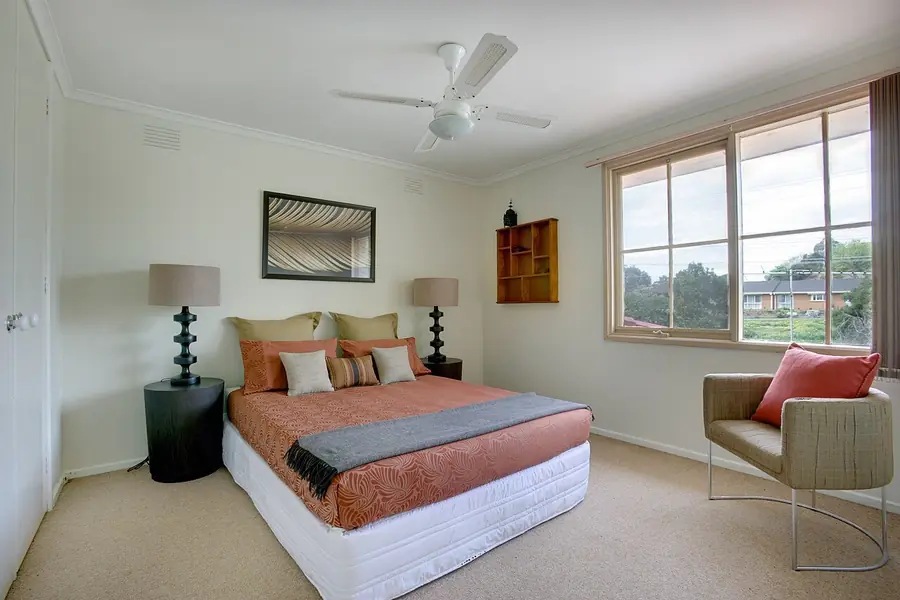
Bedrooms benefit from quiet fans with low speeds for sleeping; DC motors and remotes make that easy. Living rooms with large open areas may need a larger blade span. Rooms with low ceilings get flush mounts.
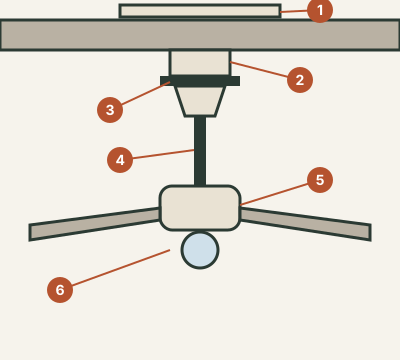
- Brace between ceiling joists
- Fan-rated electrical box
- Mounting bracket
- Downrod
- Motor housing
- Light kit
If a room has both a fan and recessed lights, keep the fan centered and the lights spaced around it so the blades do not create strobing shadows. We review placement against the existing box before you buy.
What to send
A photo of the existing fixture or fan, a photo of the box with the canopy lowered if you can do it safely, the ceiling height, and the fan model you have in mind. If there is a wall control, a photo of that too.
Pull chains and switches
Fans with pull chains can be wired to a single wall switch that stays on, with chains for speed and light. A fan with a remote receiver lets the wall switch stay on too. Mixing a wall dimmer with a remote causes problems, so we pick one control scheme per fan.
- Fans replacing a fixture on a fan-rated box
- Swapping an old fan for a new one
- Downrod and canopy changes
- Balancing a wobbling fan
- A fan where no fixture exists
- New wall controls or circuits
- Bracing that needs attic framing work
- Any scorch marks at the box
Related guide: What to check when a GFCI outlet will not reset.
Photo checklist
- The current fixture or fan on the ceiling
- The ceiling height and slope, if any
- The new fan’s box or model number
- The wall switch or remote that controls it
Questions we get
Can you put a fan where there is a light now?
Yes, if the box is fan-rated or can be retrofitted with a fan brace through the same opening.
Can you add a fan where there is no fixture?
That needs a new box and wiring, which is outside our scope.
Can I use a dimmer on a fan?
No. Use a fan speed control, or a remote kit made for the fan.
- Tenants can open up
- A code for the ceiling fan visit
Do you assemble the fan?
Yes, from the box to running.
Why does my fan light flicker?
Loose bulbs, a loose wire in the light kit, or an incompatible dimmer are common causes.
Can you balance a fan I installed?
Yes. We tighten the mount and blades and balance it with a kit.
- Free price by text
- No surprises on the ceiling fan
My fan remote stopped working. Can you fix it?
Usually. New batteries, re-pairing the remote, or replacing the receiver in the canopy solves most cases.
Why does my fan wobble?
Loose blade screws, a bent blade iron or uneven blades. A balancing kit usually fixes it.
Which way should my fan spin in summer?
Counterclockwise when you look up, to push air down. Clockwise on low in winter.
- Ceiling fan parts named up front
- Bring your own
Can you install a fan on a sloped ceiling?
Yes, with a longer downrod and an angled mounting kit if needed.
Can my existing light box hold a fan?
Only if it is rated for fans. If not, we replace it with a fan-rated brace box in the same spot.
Can you replace a fan with a light fixture?
Yes. We take the fan down, patch the canopy marks if needed and hang the new fixture on the same box.
- Text (310) 628-9399
- Phone about the ceiling fan in open hours
Can a fan run without its light kit?
Yes, most fans can. We cap the light wires or fit the cover plate the maker supplies.
- English
- Mandarin
- Cantonese Chinese
Get a quote for ceiling fan installation and replacement
Text a photo and your cross street. Free estimates, and most texts are answered within the hour.
Good to fix along with the ceiling fan
Easy to add on the same trip: swapping ceiling lights and sconces or swapping worn outlets and switches. If the cause is elsewhere, see recessed light LED retrofits; electrical fixture repairs and bathroom exhaust fan replacement come up often too.
Repairs related to the ceiling fan
Booked across the 626, in West Covina, Covina, Baldwin Park, Azusa, Temple City, Sierra Madre, Monrovia, Duarte, Irwindale and Glendora.
Replacing a Hunter or Hampton Bay fan? The Hunter and Hampton Bay ceiling fans page covers parts and remotes for those brands.Own a Hunter or Hampton Bay fan? The Hunter and Hampton Bay fan page covers wobble, noise and remotes.